May 01, 2026
Hearing loss halved in Aboriginal children
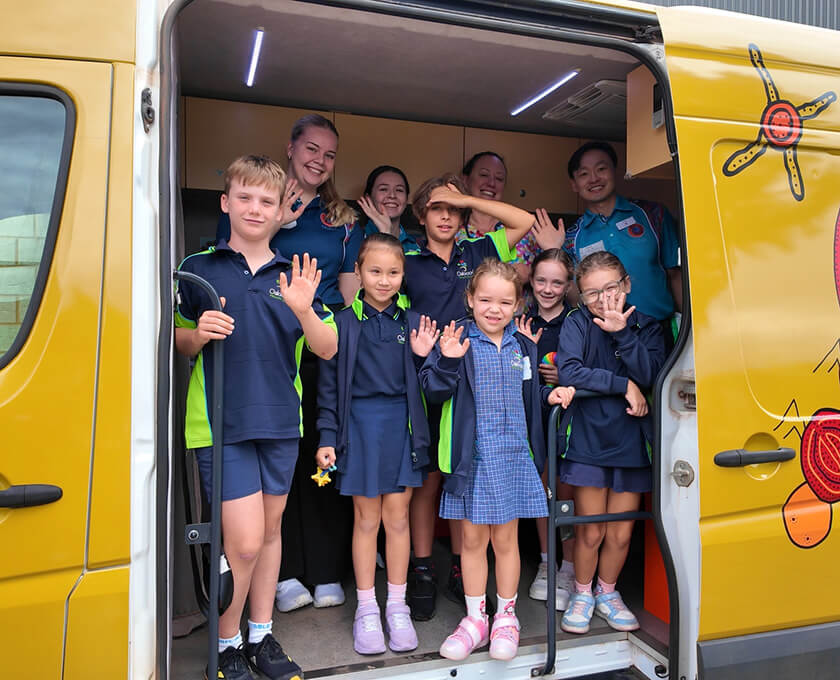
Health, education, social and emotional well being outcomes for Aboriginal children in Western Australia are being transformed by the Alcoa Foundation Earbus Program, with rates of hearing loss nearly halving to 5.6 per cent across participating communities.
Visiting schools and daycares across Perth, Peel and the Upper South West, the Alcoa Foundation Earbus mobile clinic aims to reduce the impacts of hearing loss, helping children better engage in listening and learning.
On average, Aboriginal children suffer from middle ear disease for 32 months of the first five years of life, compared to three months for non-Indigenous children.
Earbus CEO and Co-Founder Dr Lara Shur says the premise behind the program is to take the service to families, reducing barriers to access. “Earbus is a one stop shop, filling all the gaps in the treatment pathway. If a child is identified to have an ear issue, we provide immediate treatment and offer continuous care,” said Dr Shur.
Each Earbus has a dedicated clinical team comprising of a Screener, a General Practitioner or Nurse Practitioner and an Audiologist.
Last year, more than 1,700 Aboriginal and at-risk children were screened for ear disease through the program, taking the total to 4,136 individual children and 18,436 screenings since support began in 2018.
Dr Shur said the support from the Alcoa Foundation had been life changing for many children in the Perth Metro and southwest.
“Even though these children are closer in proximity to health services, they still experience ear disease, and their need is just as great as a child in the outback,” said Dr Shur. Ear disease was often mistaken for behavioral problems in the classroom, she said.
“Children with undiagnosed middle ear disease often receive negative feedback at school and are seen as inattentive or disruptive, when in fact they are struggling to hear. This can lead to disengagement because if you don't love school, you don't want to go,” she said. “We know that long term, some children with untreated ear disease may end up in juvenile justice. It's a pathway that we're trying to prevent.”
“The Alcoa Foundation is proud to support the Earbus Program to help improve quality of life for at-risk children. The program is delivering real and positive outcomes for children, and we recognise the work of the Earbus team supporting families and children where they grow and learn,” said Caroline Rossignol, President of the Alcoa Foundation.
As well as education outcomes, middle ear disease affects a child’s social development, emotional regulation, and sensory integration.
Last year, across the school within the Alcoa Foundation Earbus Program rates of Chronic Suppurative Otitis Media (a specific type of persistent middle ear disease) reduced to 0.67 per cent, well below the World Health Organisation’s 4 per cent benchmark.
Please enable targeting cookies to watch videos. You can enable targeting cookies on our Cookie Policy page.